Best Fences for Privacy: Styles for Added Seclusion
November 19, 2026
Share this article:
The best fences for privacy block sightlines with solid or overlapping construction, and the most common options for Illinois homes are wood, vinyl, composite, shadowbox, and metal with privacy panels or inserts. Each style differs in how much it actually hides, what upkeep it needs, and how it handles wind and freeze-thaw cycles. Local height limits matter just as much, since a fence that falls short of a neighbor’s sightline leaves a yard feeling exposed.
Best Fence Styles for Privacy
Privacy fence options cover a range of materials and construction styles. The
types of fences below differ in how much they hide, how they hold up in local weather, and how they look from each side of the property line.
Wood Privacy Fences
Wood remains one of the most popular privacy materials because it blocks views completely and costs less upfront than most alternatives. A standard stockade-style fence sets boards edge to edge, and gaps can open as pressure-treated wood dries and shrinks. Board-on-board construction overlaps each picket so those gaps stay covered. Horizontal board layouts are a popular modern alternative. Cedar naturally resists rot, while pressure-treated pine relies on chemical treatment; both need staining or sealing every few years to slow weathering through Illinois freeze-thaw cycles.
Vinyl Privacy Fences
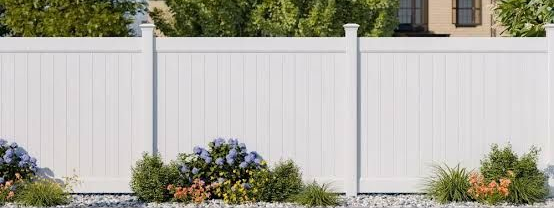
Vinyl privacy fences come in solid panels that block views and never need painting or staining. Upkeep usually means an occasional wash to remove dirt and mildew. Results depend heavily on product grade and construction. Hollow vinyl uprights perform best with internal steel or wood reinforcement, particularly at gates and corners, since solid panels take the full force of the wind. Lower-grade vinyl can also turn brittle in deep cold, so cold-climate ratings and warranty terms are worth comparing before choosing a product.
Composite Privacy Fences
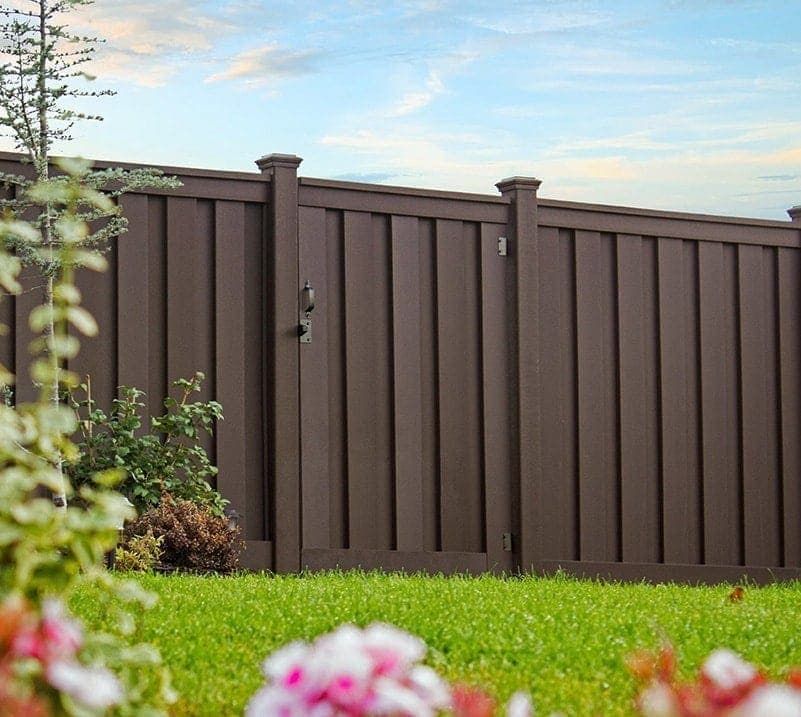
Vinyl privacy fences come in solid panels that block views and never need painting or staining. Upkeep usually means an occasional wash to remove dirt and mildew. Results depend heavily on product grade and construction. Hollow vinyl uprights perform best with internal steel or wood reinforcement, particularly at gates and corners, since solid panels take the full force of the wind. Lower-grade vinyl can also turn brittle in deep cold, so cold-climate ratings and warranty terms are worth comparing before choosing a product.
Shadowbox Fences
A shadowbox fence alternates boards on opposite sides of the rails, so it looks finished from both sides. The offset spacing lets air pass through, which reduces wind load, but gaps remain visible at certain angles, so coverage varies with viewing angle. In Carol Stream, code requires the finished side of a fence to face outward, leaving homeowners with the rails and framing on their side of a standard privacy fence. Shadowbox avoids that tradeoff, which also makes it a popular choice for fences shared between neighbors.
Metal Privacy Fences With Panels or Inserts
Metal privacy options fall into two groups. Aluminum and steel fences can be built with solid or overlapping panels in board-on-board or horizontal styles, creating full privacy with very little upkeep beyond occasional cleaning. Chain link with inserted slats is the budget-friendly route, especially for an existing fence, though coverage typically ranges from about 75 percent to nearly full, depending on slat style and mesh size. Some villages, including Carol Stream, prohibit chain link along lot lines or yard areas that border a street.
Privacy Fence Materials: Maintenance and Durability Compared
Long-term value depends on more than the installed price. Maintenance time, expected lifespan, and coverage all shape what a privacy fence costs over the years. Lifespans below assume proper installation and routine care.
| Material | Privacy Level | Upkeep | Typical Lifespan | Relative Cost |
|---|---|---|---|---|
| Wood (board-on-board) | Full | Stain or seal every few years | 15-20 years | $ |
| Vinyl | Full | Occasional washing | 25-30+ years | $$ |
| Composite | Full | Occasional washing | 25+ years | $$$ |
| Shadowbox (wood or vinyl) | High, varies by angle | Matches material | Matches material | $$ |
| Aluminum or steel panels | Full | Minimal, occasional cleaning | 30+ years | $$$ |
| Chain link with slats | Partial to near full | Replace slats over time | Slats: 10-25 years | $ |
Key Features of an Effective Privacy Fence
The best fences for privacy share a few traits beyond material choice. Coverage starts with sightlines: a fence on lower ground or next to a two-story home may leave views open even at full height, so grade changes and neighboring windows deserve a close look before planning. Gates need the same solid or overlapping construction as the panels, since a gapped gate undercuts the rest of the fence. Structure matters too. Solid privacy panels catch more wind than open designs, so footings set below the region’s 42-inch frost depth and reinforced gate and corner uprights help the fence stay straight for years.
How Tall Should a Privacy Fence Be?
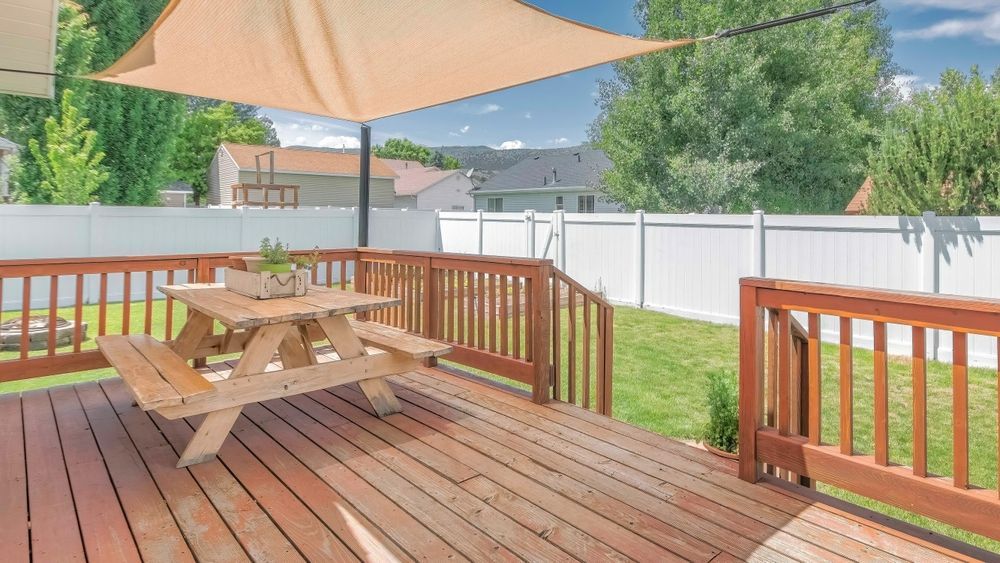
Six feet is the most common privacy fence height in Chicago-area suburbs, tall enough to block views from a standing adult on level ground. Local limits vary, though. Naperville permits six feet, and unincorporated DuPage County sets the limit at six and a half feet outside the front yard. Carol Stream caps most residential fences at five feet, with taller fences permitted next to major streets, parks, and nonresidential properties. The village also allows a mostly solid six-foot privacy fence within five feet of a patio or first-floor deck. For many yards, a taller screen around the patio blocks the sightlines that matter most.
llinois Privacy Fence Rules and Permit Requirements
Most Chicago-area villages need a fence permit, and the details vary by town. Common steps and rules include:
- A plat of survey marking the fence location, height, and material
- A contractor proposal and permit fee submitted with the application
- A mandatory 811 call before digging (JULIE in the suburbs, DIGGER in Chicago)
- Finished side facing outward, a rule in both Carol Stream and Naperville
- Property pins exposed and visible until the final inspection in Carol Stream
- HOA architectural approval, when applicable, before the village application
Checking village code early keeps a privacy fence from failing inspection or needing costly changes after installation.
Find the Right Privacy Fence for Your Property
FTC Oury Group installs wood, vinyl, composite, aluminum, and chain link privacy fencing for homeowners across
Chicagoland and southern Wisconsin. Getting there takes three steps: share privacy goals, compare styles that fit local code, and schedule installation. The result is a backyard that feels private from the patio to the property line.
Explore privacy fence installation
with FTC Oury Group.
Connect with Us: